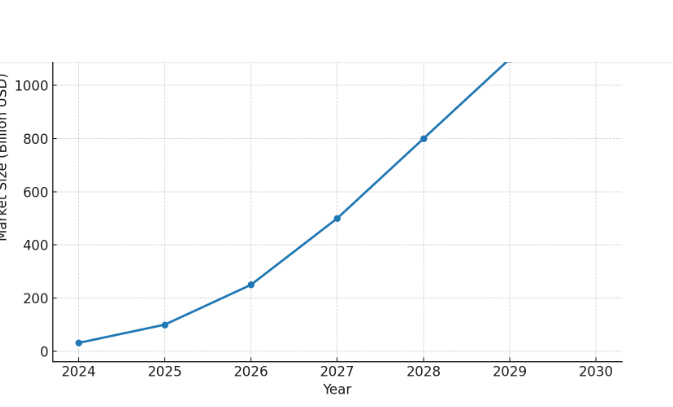
Blockchain technology has rapidly moved beyond the hype of Bitcoin and cryptocurrencies. Today, it stands at the heart of a digital revolution that promises to reshape industries, governments, and everyday life. Valued at $31.28 billion in 2024, the blockchain market is projected to explode to $1.43 trillion by 2030 — a staggering 90.1% annual growth rate.
This growth is not just about financial speculation. It reflects a fundamental shift toward decentralized, transparent, and secure systems that challenge traditional centralized models. By 2030, blockchain will no longer be an “emerging technology” — it will be essential digital infrastructure powering finance, supply chains, healthcare, governance, and beyond
What is Blockchain and Why It Matters?
At its core, blockchain is a distributed ledger system that records transactions across multiple computers. It is built on three core principles:
Decentralization – No single entity controls the system.
Immutability – Once recorded, data cannot be altered.
Consensus – Transactions are validated collectively by the network.
This design makes blockchain transparent, tamper-proof, and trustless, removing the need for intermediaries like banks or regulators.
Smart Contracts: The Game-Changer
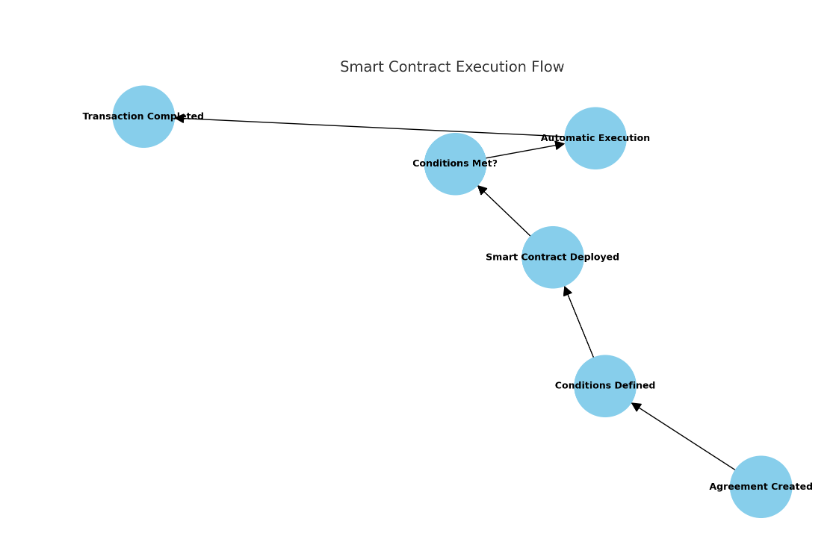
Smart contracts are self-executing digital agreements. They trigger automatically when predefined conditions are met — no lawyers, no middlemen, no delays. From insurance claims to real estate deals, smart contracts are automating trust.
Blockchain Adoption Across Industries
Blockchain is no longer theoretical — it’s being deployed worldwide.
Finance and Banking
Cross-border payments now settle in minutes instead of days.
Asset tokenization allows fractional ownership of real estate, stocks, and bonds.
Central Banks are developing CBDCs (Central Bank Digital Currencies) for faster, cheaper, and more inclusive economies.
Supply Chains and Logistics
Companies like Walmart, Maersk, and De Beers use blockchain for product traceability.
Blockchain + IoT enables real-time shipment tracking and automatic payments.
Healthcare
Secure, patient-controlled health records.
Drug authenticity verification to fight counterfeit medicines.
Clinical trials stored transparently for trust and compliance.
Government & Public Sector
Estonia uses blockchain for national identity systems.
Dubai runs blockchain-based real estate transactions.
Over 130 countries are testing or implementing CBDCs
The Evolution of Blockchain Technology
Scalability and Performance
Blockchain once struggled with speed. But now:
Layer 2 solutions like rollups and sidechains enable thousands of transactions per second.
Sharding divides networks into smaller parts for efficiency.
Transition from energy-heavy Proof-of-Work to green Proof-of-Stake.
Ethereum’s shift cut its energy use by 99%.
Future: quantum-resistant cryptography to withstand quantum computing threats.
Web3: The Next Internet
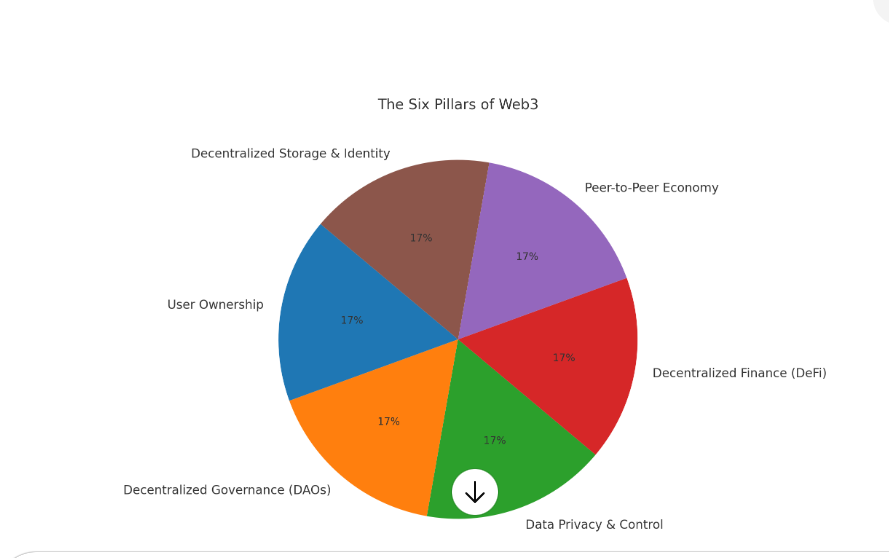
The rise of Web3 marks the internet’s next chapter — one where users own their data instead of tech giants.
DAOs (Decentralized Autonomous Organizations): New models of governance without hierarchy.
DeFi (Decentralized Finance): Banking services without banks.
Decentralized Storage & Identity: Greater control over privacy and security.
Emerging Applications Beyond Finance
NFTs (Non-Fungible Tokens): Now used for identity verification, education certificates, event ticketing, and IP rights — not just digital art.
Gaming & Virtual Economies: Players own their in-game assets and can trade them across games. “Play-to-Earn” models provide real-world income.
Metaverse & Digital Real Estate: Virtual properties are being bought, sold, and developed just like real land.
Challenges to Overcome
Despite its promise, blockchain faces hurdles:
Scalability & Infrastructure – Mass adoption still needs faster networks.
Regulatory Uncertainty – Many countries lack clear laws for crypto/blockchain.
User Experience – Wallets, keys, and dApps are still too complex for beginners.
Environmental Concerns – Proof-of-Work’s energy consumption, though reducing with PoS
The Road Ahead to 2030
By 2030, blockchain will be:
Integrated across all industries — from healthcare to energy.
Quantum-resistant and AI-powered — enabling secure, intelligent automation.
Fully interoperable — blockchains will talk to each other seamlessly.
Part of daily life — from digital ID to CBDCs powering economies.
This decade is about blockchain moving from “innovation” to “infrastructure.” Those who adapt early will shape the decentralized future.
Conclusion
Blockchain is no longer just about cryptocurrency — it’s about trust, transparency, and transformation. By 2030, it will power the backbone of the global digital economy.
The key question is: Will you be a passive observer of this revolution, or an active participant in shaping it?