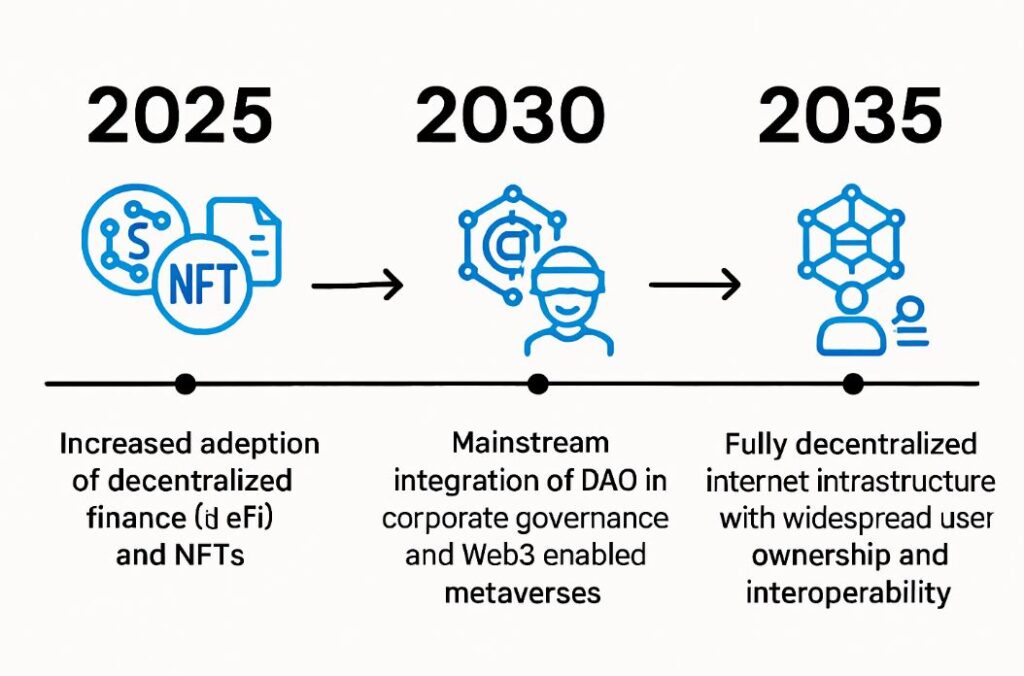
The internet is entering its third major phase — Web3. After decades of centralized platforms dominating our online lives, Web3 promises a decentralized internet where users regain control, privacy, and ownership of their data and assets. Powered by blockchain technology, Web3 is more than just a buzzword — it’s a complete shift in how the internet will work by 2030.
Web2 (2004–Present): Social media boom, mobile apps, user-generated content. However, Big Tech platforms like Google, Facebook, and Amazon centralized power and profit.
Web3 (2020s–Future): Built on blockchain, it offers a read-write-own internet where users control their identities, assets, and interactions
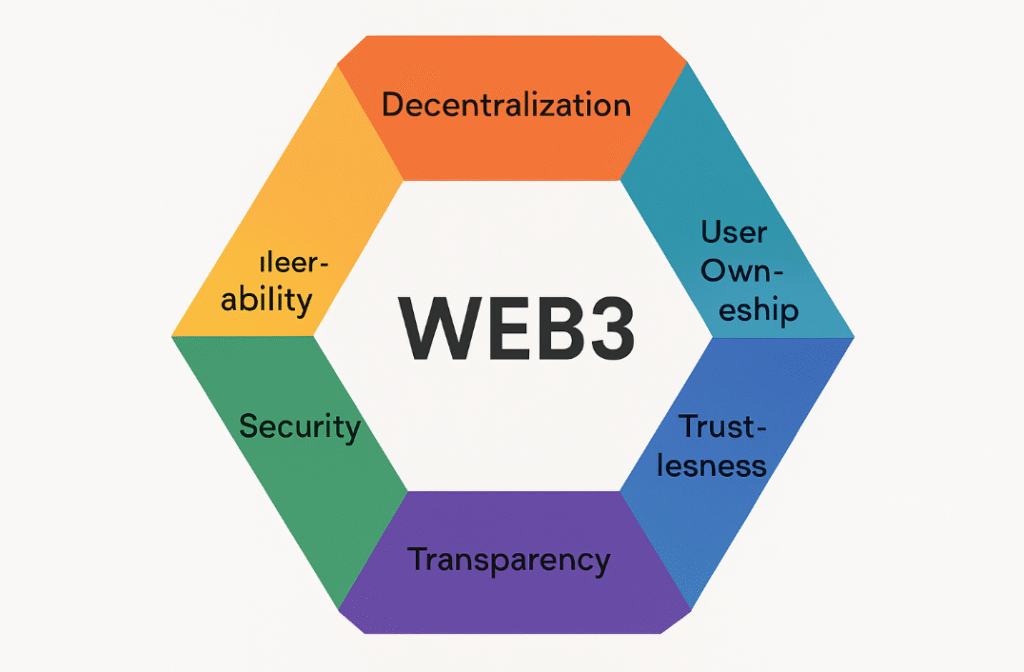
Core Principles of Web3
Decentralization – No single company controls the network.
Ownership – Users own tokens, NFTs, and data instead of platforms.
Privacy & Security – Cryptography and blockchain protect user identity.
Interoperability – Different blockchains and applications can connect seamlessly.
Key Technologies Powering Web3
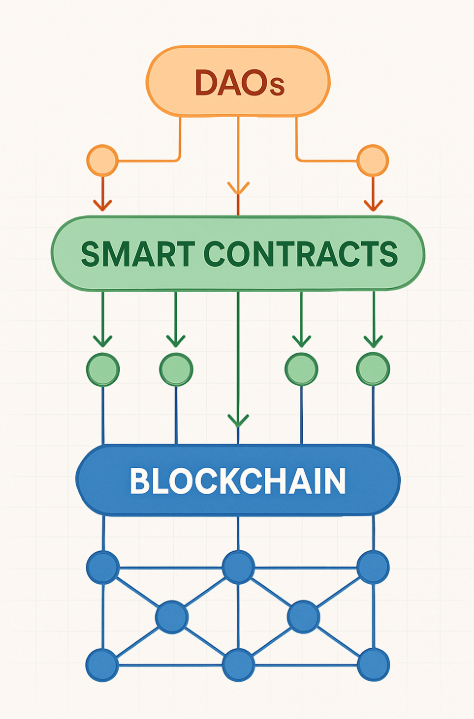
Blockchain: The backbone that stores data securely.
Smart Contracts: Automated digital agreements.
DAOs: Communities run without central leadership.
Cryptocurrencies & Tokens: Enable transactions and incentives.
Web3 Applications & Real-World Use Cases
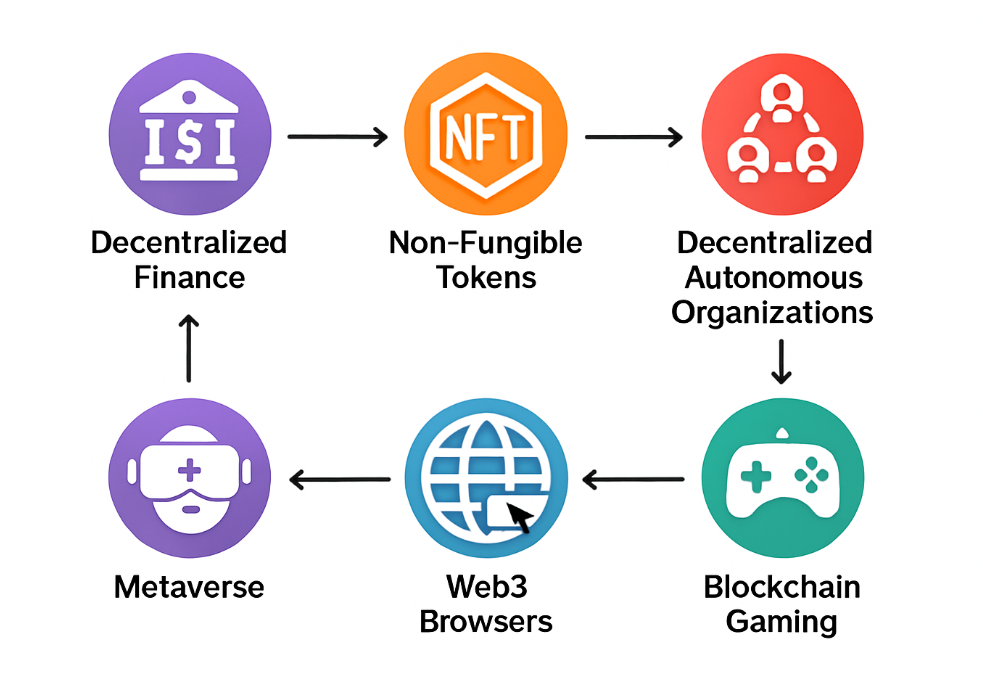
Decentralized Finance (DeFi): Borrow, lend, and trade without banks.
NFTs Beyond Art: Education certificates, event tickets, medical records.
Gaming & Metaverse: Players own in-game items (Play-to-Earn).
Digital Identity: Self-sovereign IDs for secure logins.
Decentralized Storage: Safer, censorship-resistant data storage.
Benefits of Web3
Empowers Users: True data ownership.
Breaks Big Tech Monopoly: Less control by a few companies.
Financial Inclusion: Banking for the unbanked.
Transparency: Every transaction traceable on blockchain.
Challenges & Limitations of Web3
Scalability: Still slower than centralized systems.
Regulation: Governments haven’t set clear rules yet.
Complexity: Wallets, private keys, and tokens confuse beginners.
Security Risks: Smart contract bugs can cause major losses..
The Future of Web3 (2025–2030)
By 2030, Web3 will likely:
Merge with AI, IoT, and Quantum tech.
Be used by governments for digital IDs, voting, and governance.
Become part of daily life (payments, healthcare, education).
Conclusion
Web3 represents a fundamental shift in power — from corporations back to individuals. While challenges remain, its growth is unstoppable. The question is:
👉 Will you just watch Web3 evolve, or will you be part of building the decentralized future?